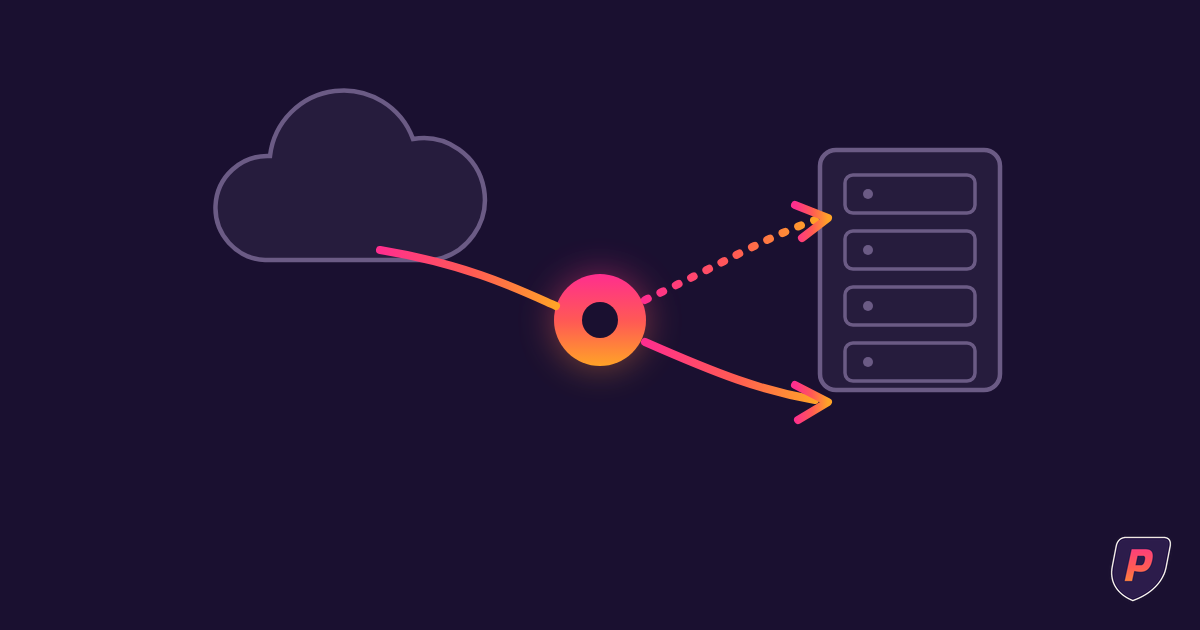
Every AI conversation eventually arrives at the same fork: rent intelligence from a cloud API, or run it on hardware you own. The vendors on both sides will tell you the answer is obvious. It isn't — it's a scoping question, and the honest answer for most mid-market companies is both, deliberately assigned.
What cloud models buy you
Frontier capability, zero infrastructure, and instant scale. The strongest reasoning models available today are API-only, and for work that genuinely needs frontier intelligence — complex analysis, long-document reasoning, agentic coding — the cloud ceiling is meaningfully higher than what runs on a server in your rack. You also inherit the provider's uptime, security engineering, and model improvements without lifting a finger.
What cloud models cost you
Metered spend that scales with enthusiasm. Token billing means your bill grows with adoption — which is exactly what happened across the industry this year, with enterprises publicly blowing through annual AI budgets in months and at least one major company now capping employee token spend per week. Success creates the cost problem.
Your data in transit. Every prompt leaves your network. Enterprise API terms are far better than consumer tools, but for regulated data, litigation-sensitive material, or trade secrets, "it leaves the building" is itself the finding.
Dependency you don't control. Models get deprecated, repriced, rate-limited — and, as this summer demonstrated, can be pulled offline entirely by events far above your pay grade. A workflow built on a single hosted model inherits every one of those risks.
What local models buy you
Open-weight models — Llama, Mistral, Qwen, and purpose-tuned families like Hermes — now deliver a level of capability that would have been frontier-class two years ago, and they run on hardware a mid-market company can realistically own. The wins: data never leaves (the whole compliance conversation changes when inference happens on your network), predictable cost (hardware depreciates on a schedule; tokens don't), permanence (nobody can deprecate, reprice, or export-control a model you have on disk), and latency (no round trip, no rate limits, no queue).
What local models cost you
Capability ceiling and operational burden. A 30–70B parameter model on your own GPU is genuinely capable for drafting, summarization, extraction, classification, and internal search — but it is not a frontier reasoner, and pretending otherwise produces bad decisions. And someone has to run it: model updates, inference servers, GPU health, monitoring, evaluation. That's an operations job, not a weekend project.
The framework
Assign workloads, not loyalty. Route by two axes: data sensitivity and capability requirement. High-sensitivity, moderate-complexity work — summarizing contracts, drafting from internal documents, classifying records — is the natural local workload. Low-sensitivity, high-complexity work goes to frontier APIs. High-sensitivity, high-complexity work is where the real architectural decisions live, and where most companies need help. The wrong answer is the accidental one: everything in the cloud because nobody decided, or everything local because someone read a headline.
This routing decision — which workloads, which models, which controls — is exactly what an AI readiness assessment scopes, and running the resulting stack is what Managed AI Operations exists for. If you want the local half of this argument in full, read the business case for running AI on your own hardware — or book a briefing and we'll map your workloads to the right side of the fork.